Wildlife Photography, Brand Marketing, and Shooting Billie Eilish’s Album Cover with William Drumm
In episode #64, host Brett Stanley talks with underwater photographer, filmmaker, and content creator William Drumm about building a career between wildlife photography and brand marketing, and the story behind shooting Billie Eilish’s Hit Me Hard and Soft album cover shoot. William shares how a childhood obsession with holding his breath turned into a marine biology degree, a stint as a cell biologist in Seattle, and a string of press trips that convinced him to go all in on photography.
They discuss working in Monterey Bay, shooting for PBS’s Big Pacific documentary, and moving from stills into video as the licensing math changed underneath him. William walks through how a set of whale images from Tonga led to Billie Eilish’s team reaching out, what it took to recreate the open ocean inside a Hollywood studio tank, and how that one shoot reshaped his business toward brand marketing through Drumm Media. They close out talking about AI’s growing presence in wildlife and commercial photography, and what it means for authentic work going forward.
Follow this guest: Instagram, Website
Episode Summary
William Drumm: Wildlife Photography, Brand Marketing, and Shooting Billie Eilish’s Album Cover
In this episode of the Underwater Podcast, host Brett Stanley talks with underwater photographer, filmmaker, and content creator William Drumm about building a career between wildlife photography and brand marketing, and the story behind directing Billie Eilish’s Hit Me Hard and Soft album cover shoot. William shares how a childhood obsession with holding his breath turned into a marine biology degree, a stint as a cell biologist in Seattle, and a string of press trips that convinced him to go all in on photography. They discuss working in Monterey Bay, shooting for PBS’s Big Pacific documentary, and moving from stills into video as the licensing math changed underneath him. William walks through how a set of whale images from Tonga led to Billie Eilish’s team reaching out, what it took to recreate the open ocean inside a Hollywood studio tank, and how that one shoot reshaped his business toward brand marketing through Drumm Media. They close out talking about AI’s growing presence in wildlife and commercial photography, and what it means for authentic work going forward.
00:00 Meet William Drumm
00:58 Hot Tub Breath Holds
01:36 Jellyfish Bucket in Australia
02:47 Scuba Certified at Twelve
04:51 Discounted Gear and First Strobe Shot
06:48 Marine Biology and a Day Job in Science
08:36 First Press Trips: Puffins and Polar Bears
10:58 Carhartt Sponsorship and Early Paydays
13:36 Lighthouse Keeper on Puffin Island
16:48 Choosing Photography Over Science
18:14 Monterey Bay and Shooting Big Pacific
20:36 Shift from Stills to Video
23:36 Stock Footage and Licensing
25:14 Moving Back to Denver, Pivoting Into Brand Marketing
30:58 How Billie Eilish’s Team Found Him
32:47 Recreating the Ocean in a Studio Tank
36:14 Directing a Hollywood Crew
37:36 The Flooded Monitor Housing
41:58 Working With Billie in the Water
45:21 The Album’s Most Challenging Shot
48:36 Instagram Growth After the Shoot
51:36 Founding Drumm Media
55:14 Social Media, SEO, and AI Search
1:02:47 The Ethics of AI Images and Wildlife
1:06:00 Underwater Portraiture as Art
1:07:36 Influences and Closing Thanks
Discuss the episode in our facebook group.
About William Drumm – UNDERWATER PHOTOGRAPHER & FILMMAKER
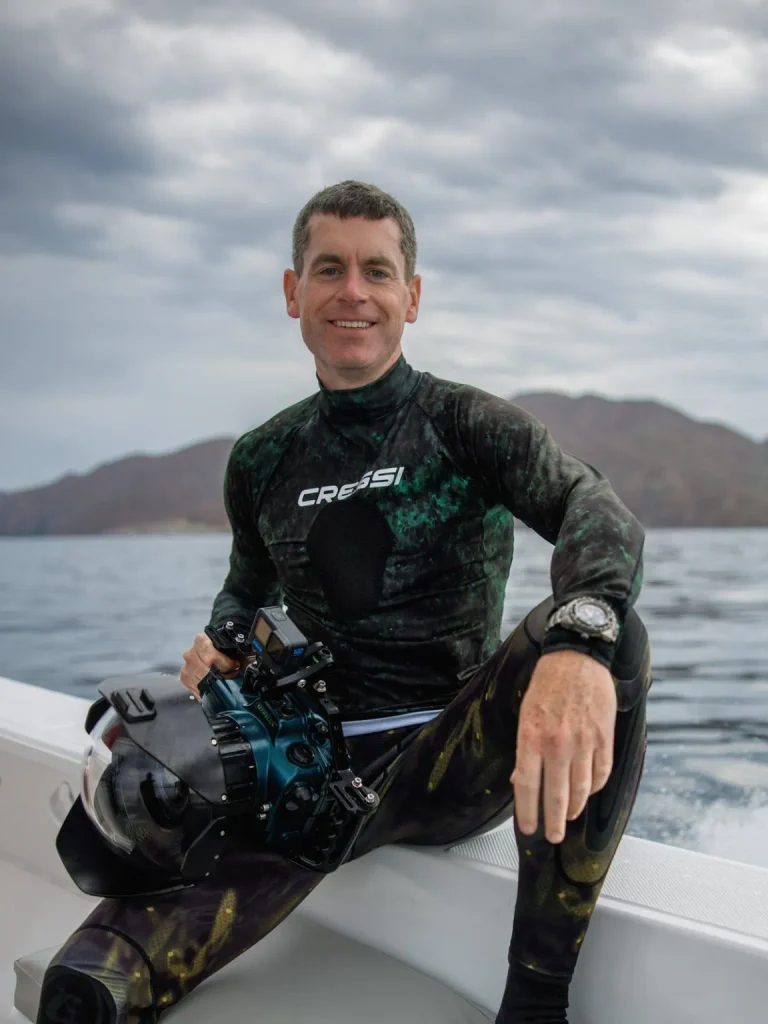
William Drumm is a Denver-based underwater photographer, filmmaker, and ocean ambassador specialising in high-end brand photography, fine art prints, and marine conservation storytelling. He holds a BA in Journalism and a BS in Ecology and Evolutionary Biology from the University of Colorado Boulder and is a PADI Divemaster.
William is best known for photographing Billie Eilish’s Hit Me Hard and Soft album cover, and he’s a long-term brand photographer and visual partner with Scuba Diving International (SDI). His client list includes Citizen Watch, Cressi, Suunto, Seiko, GoPro, and Carhartt, alongside cinematography credits on PBS and Natural History New Zealand’s Big Pacific. He’s logged dives across five continents, with repeat expeditions to Tonga, the Yucatan, Cabo San Lucas, and St. Eustatius.
He runs Drumm Media, a boutique marketing agency for outdoor and ocean brands, and in 2025 launched Allure Aqua, an underwater studio built around portrait, fashion, and fine art photography made in the water.
Find his work at williamdrumm.com and on Instagram at @williamdrumm.
Read the Full Transcript
Brett Stanley: Welcome back to the Underwater Podcast. In this episode, I’m talking to William Drumm, an underwater photographer, videographer, and content creator. William’s love for the water started far from his home of Denver, on a beach in Australia collecting jellyfish in a bucket, and quickly moved on to studying marine biology and shooting wildlife around the world. We talk about how his work in the lab resulted in him photographing polar bears and puffins in the Arctic, campaigns for well-known dive and sports brands, and how a photo of a whale landed him the job of creating Billie Eilish’s acclaimed album cover. Okay, let’s dive in. William, welcome to the Underwater Podcast.
William Drumm: Thanks for having me, man.
Brett Stanley: It’s good. We’ve been talking about doing this for a little while, and you’ve been in this underwater world for quite a while now. How long have you been shooting underwater for?
William Drumm: I’ve been shooting underwater professionally, full-time, since about 2014 or 2015. I got my first underwater camera back in 2007 or 2008, so I’ve been playing around with it for quite a while.
Brett Stanley: What got you into underwater photography to start with?
William Drumm: I’ve always just loved being underwater. When I was really little, my parents had a hot tub in the backyard, and I would sit underneath the water and suck the bubbles out of the jets and stay under as long as I possibly could. Probably wasn’t super healthy, but I’m still here, so no problem yet.
Brett Stanley: That’s the first time I’ve heard that. I just had a conversation with freedive instructor David Cobiella, and he said the same thing. I did it too as a kid. Whenever we went to a hotel pool, I’d go down and breathe into the filter jet, and my parents would scold me for it.
William Drumm: That’s hilarious. I didn’t know it was a common thing.
Brett Stanley: I think it’s a dumb, boy thing to do when you’re young.
William Drumm: Aquaphiles, totally. So yeah, I always loved being underwater, and then we lived in Australia for three or four years when I was a kid, from about age three until seven. I’m from Denver, but we were living in Melbourne, in a bunch of different places around there. That’s where I fell in love with the ocean and started getting excited about the animals that live there. I remember one time we were at the beach and I had my little bucket, and I went around and collected a bunch of jellyfish that had washed ashore and showed them to my mom. She got all freaked out that I was going to get stung. But I was just fascinated by it. My parents caught onto that, and then they got me scuba certified at a goose-poop-filled pond behind a Walmart here in Denver when I was twelve years old.
Brett Stanley: The hot tub situation continues.
William Drumm: Exactly. So I got into diving at twelve, and then in college I took a photojournalism class, which was my first real introduction to photography. I had a great instructor, and it was awesome because I could get press passes to CU Boulder football games and other sporting events and concerts. So I started to see the kind of access you can get through photography. Then I travelled to Australia again, to James Cook University in Queensland, and got my dive master’s on a liveaboard, working all the time and seeing the Great Barrier Reef a lot. They had an underwater photography class at James Cook, but it got cancelled right before I started, so they were selling off all their old equipment. I was able to get a Subal housing with a Nikon Coolpix camera, strobes, and everything, for pennies on the dollar. So I kind of walked into it, got lucky, and started shooting.
Brett Stanley: So they weren’t teaching it by then. You had to work it out on your own.
William Drumm: Yeah, they weren’t teaching it. I really struggled with figuring out how the strobes worked and how everything went together. I remember the first time I got my strobes synced properly, I took a photo of a starfish, looked in the viewfinder, and saw that bright red colour when all my previous images had just been blue, blue, blue. That was super exciting.
Brett Stanley: That’s awesome. When was that? The Coolpix is pretty old by now, right?
William Drumm: Yeah, that was 2008. One of the very early generation digital cameras. If I shot raw, it would take so long to process the images, and it was hard to work with, but it was cool.
Brett Stanley: Had you been into photography on land before that, or did both start around the same time?
William Drumm: About the same time. I took the photojournalism class about a year before I moved to Australia, so I was already getting into photography, which is probably why I jumped at the equipment when I saw it on sale from the university.
Brett Stanley: What were you actually studying in Australia?
William Drumm: Marine biology. Like a lot of kids, I thought I wanted to be a marine biologist, but it was good going there and doing the classes because I saw what it actually is, and for me, being pretty ADHD, it just didn’t hold my interest as much as I wanted it to. Photography was the opposite. It was always dynamic and changing and exciting.
Brett Stanley: I hear that a lot. I wanted to be a marine biologist as a kid too, and now I’m so glad I don’t do that for a job, because I love the water but I’m terrible on boats.
William Drumm: Really? I love being on the boat and in the water, but the tedious, science side of it was just too much for me.
Brett Stanley: So how did you go from that to making a career out of underwater photography?
William Drumm: After university, I did a double degree in biology and journalism at CU Boulder, and I wasn’t sure where I wanted to go. I wanted to be a wildlife photographer, but I was still fascinated by science even though marine biology wasn’t a good fit. I worked in cell biology labs at university and was able to get a job in science, which is a lot easier than finding your way in photography straight out of school. So I worked as a cell biologist and lab automation engineer in Seattle for several years. I loved it, really exciting work, automating science experiments with robots for researchers. But I was also diving a lot after work. I’d always have my dive gear in the back of my Honda Accord, heading out after work to dive Cove 2 in Seattle and other spots, until late at night. That went on for a while, and it was draining trying to do both. I also had my first press trip around that time, a trip to Grand Manan Island in New Brunswick to photograph puffins. That was awesome, and it showed me there was some potential there. I also got a trip to Manitoba to photograph polar bears. So there were some signs that I might be able to make a career out of photography, and eventually I got overwhelmed and had to choose one or the other. I chose photography, moved to Monterey, California, and got started.
Brett Stanley: With those press trips, how did you land them? What was the in, and who were you shooting for?
William Drumm: Like so many things in photography, it was through connections. I had friends at Matador Network, kind of a travel and adventure publication, really popular at the time and great for people just starting out who are trying to get press trips. I got the Grand Manan trip through them. The polar bear one was actually through a Twitter contest, where you had to post why you wanted the trip. I posted something silly about how polar bears weren’t going to want to eat me because of my camera gear, and it won me the contest, which was great, and the trip itself was excellent. You’re out on these tundra buggies, these giant vehicles that drive out into the tundra, and you’re standing fifteen feet up on the buggy, so the polar bears come right up and jump up on the side of it. You’re literally inches away from them.
Brett Stanley: Where is this?
William Drumm: Churchill, Manitoba, on the Hudson Bay.
Brett Stanley: My geography is terrible. Where’s Manitoba?
William Drumm: Far north Canada, a bit central-northeast, central Canada.
Brett Stanley: Arctic kind of thing?
William Drumm: Yeah, basically. I think it’s above the Arctic Circle, but I’m not positive. Pretty much the Arctic though.
Brett Stanley: That’s so remote. How did you even get there?
William Drumm: A few flights into Manitoba, into a pretty small airport. It’s funny, even at the airport there are warning signs about polar bears everywhere, because they’re just everywhere there. People have to live next to them. There have been multiple polar bear attacks within city limits. It’s a small town now primarily driven by polar bear tourism, but it used to be a lot bigger, driven by mining and that kind of thing back in the day.
Brett Stanley: It’s interesting you mention the Twitter competition, because I recently saw one for Iceland, where the pitch was that Iceland is so beautiful you can’t take a bad photo of it, so they wanted to find the worst photographer in the world and bring them over. Did you see that?
William Drumm: I didn’t, but that’s hilarious.
Brett Stanley: They actually found someone, a woman, and showed some of her photos, which were truly terrible. They took her to Iceland, and I haven’t seen the shots she took there, but I imagine they’re amazing. I love the idea of someone going, “Hell yeah, I take terrible photos.”
William Drumm: You ought to see my photos. With that polar bear trip, it was great, because once I had it in the bag, I started reaching out to brands, and ended up getting Carhartt to sponsor the trip. They gave me some cash and a bunch of gear. It was the first real paid trip I’d had before I even went, and I shot images for them while I was up there.
Brett Stanley: How did that work with Carhartt? Was that a straight trade and sponsorship, or did you get licensing out of it too?
William Drumm: They gave me a lump sum for the content plus the gear, and I was pretty stoked. It was a fat payday for me, just starting out.
Brett Stanley: How old were you at this point?
William Drumm: Twenty-three, twenty-four, around there.
Brett Stanley: Still young, worldly kind of thing. And then you went and shot the puffins too?
William Drumm: That was before the Carhartt trip, and that one was more of a trade trip. Another great trip though. All the lodges I stayed at were lovely, and the deliverables were pretty broad, so I did a lot of exploring and checking out things I probably wouldn’t have otherwise, and it was all self-guided. That was in New Brunswick. The puffins themselves are on Grand Machias Seal Island, which has a really cool story of its own. The island is contested between Canada and the United States, there’s a lighthouse on it, and a single guy lives there by himself, to maintain Canada’s claim on it. The guy who lived there had an amazing story.
Brett Stanley: Was he a lighthouse keeper, or more of a caretaker?
William Drumm: Probably both. He was also ex-military, a grizzled, tough guy, really fit the part.
Brett Stanley: How big is the island? Is he the only person on it?
William Drumm: The only person. It’s tiny, you could walk the whole thing, probably a few hundred metres each direction.
Brett Stanley: Just him and a bunch of puffins. That’s incredible. This is a digression, but in one of the Star Wars films, the one where Luke Skywalker comes back, they filmed on an island with puffins, and because they didn’t want the puffins in the shot but they kept walking into frame, they turned them into a little alien creature in post.
William Drumm: I know what you’re talking about, and those creatures were super cute. I didn’t know that, but it makes sense now that you say it.
Brett Stanley: So underneath every one of those is a puffin that just didn’t give a shit. I think it was an island over in the UK.
William Drumm: That makes sense.
Brett Stanley: On those shoots, were you on your own, freelancing?
William Drumm: The Grand Manan trip, yes, all by myself with a rental car, which was cool. The Arctic trip, I was able to bring a guest, so I brought my girlfriend at the time.
Brett Stanley: And then you had to decide between science and photography, and chose photography.
William Drumm: I did. It was pretty scary. I haven’t had an office job since then, I’ve been working from home since around 2014 or 2015. I gave up the steady paycheque and the 401k, which was daunting, but I moved to Monterey Bay at that time. For somebody trying to get into it without a lot of obligations, it was amazing being able to drive out and go diving in Monterey Bay anytime, with always something different happening with the wildlife, so I could chase stories when I found them. I was super broke for a long time, but it was a really fun time in my life.
Brett Stanley: Monterey Bay seems like an expensive place to live, given how beautiful it is and the wealth in that area. How was it for someone coming in on the bones of their ass trying to start up?
William Drumm: Difficult. Extremely expensive. During the pandemic, people from the Bay Area moved further and further out too, so I’d later talk to people commuting to the Bay Area from Monterey, two hours each direction. There’s a lot of money there. I wasn’t actually living in Monterey, I was in Marina next door, a bit more affordable, but eventually I moved out because it was hard to survive.
Brett Stanley: I’d imagine it’s great for the subjects you’re shooting, since they’re all there, but the clients you’re working with are probably elsewhere.
William Drumm: Definitely. A big advantage of living there though is that we’d always joke it’s impossible to plan a photo shoot in Monterey and have it work out if you’re not actually there, because the conditions are so variable. I filmed for a big Pacific documentary where we were filming sea otters, and the main point of the story I worked on was giant green sea anemones feeding on large animals, because they can actually eat birds and fish and all sorts of things. They brought in filmmakers, a boat down from Canada and some pretty famous cinematographers, and we went out for two weeks and maybe got five shots the whole time because the conditions were so bad. Right when the shoot was wrapping up, the visibility started to change, and basically the day they left, everything got good. So they ended up hiring me as a cinematographer for a week after they left, so I could actually shoot the stuff we’d tried to shoot. I’d been the guide for two weeks for these other guys, they left, conditions got good, and then they hired me to film it myself.
Brett Stanley: Which is a benefit of being local, they didn’t have to pay to fly you out or bring you back.
William Drumm: Exactly.
Brett Stanley: What was the transition from stills to video like for you? Was that planned, or did it just come up and you figured it out?
William Drumm: I always loved shooting with my GoPro. I made a manatee video for GoPro before I even moved down there. I was really inspired by shooting short wildlife clips for social media that show things people never see, a really good format for a couple of seconds of an octopus changing colours or a sea hare attacking its prey, things that fit well with the visual side of video. So I was always into GoPro, and honestly, most of my financial success came through video as well. I licensed a fair amount of footage, I was the cinematographer on that big Pacific project, so I kind of always did both, but as I moved toward freelancing full-time, I was landing a lot more paid video work than photo work, so it naturally turned into favouring video for a while.
Brett Stanley: Did you find the video projects paid more than the stills?
William Drumm: Yes. And I also found I could license a lot more stock footage than stock images.
Brett Stanley: Why do you think that is, because video had more to offer than stills?
William Drumm: I think there was just a delay in the stock video market compared to stock photos. It took longer for the saturation of stock video to reach that of stock photo, so it was easier to license. There was less content out there.
Brett Stanley: Because stills were much more accessible, people could go out and shoot and saturate it faster.
William Drumm: Exactly.
Brett Stanley: Who were you selling the stock through? An agency like Getty, or something else?
William Drumm: At that time, a lot of it was through Nature Footage, a stock market specifically for natural history filmmaking. Later on I moved into Pond5 and a lot of the other stock players.
Brett Stanley: You were in Monterey. Are you still there, or back in Denver now?
William Drumm: Back in Denver, I’ve been here for a while now. I came back around 2016, so I was in Monterey for three or four years.
Brett Stanley: What prompted the change?
William Drumm: How expensive Monterey was, really. I was struggling, grinding, and I liked it a lot, but the conditions are so variable. The animals are there, but it’s hard to get consistently nice conditions, like a lot of places in California. My goal was to move to San Diego, so I was going to come back to Denver for six months, save a bit of money, and then move there, but then I met my ex-wife while I was in Denver, so I ended up staying.
Brett Stanley: Business-wise, how did you transition from having the coast right there to suddenly being up in the mountains?
William Drumm: A lot of the brands I worked with when I was in Monterey, I noticed this big gap between the content I was giving them and what they were actually using for marketing. I was growing my Instagram pretty fast at the time, and I really loved Instagram, it was fun for me. So with some of the brands I was shooting for, I approached them and said, look, I’m giving you all this stuff and you’re not using it, how about I take over your social media and actually help get it out there for you. That was a pretty natural progression from just shooting content to helping brands actually use the content. I was already set up for moving to Denver by then, I’d landed my first long-term marketing and photography gig, and I was still able to travel a lot, shoot for the brands, get a bunch of assets, come back to Denver, and help them figure out what to do with it all.
Brett Stanley: Were you directly involved in what ended up on Instagram, or were you working with their in-house social teams?
William Drumm: For a lot of it, I was doing everything. Planning the shoot, putting together shot lists, finding models, going to the location, shooting, coming back, editing, building a content strategy, posting myself on social media. I’d work directly with their marketing agency or their marketing team, but then also as a contractor working directly for them.
Brett Stanley: Kind of a one-stop shop.
William Drumm: Exactly.
Brett Stanley: What sort of brands were these? You’re talking about shooting with models and talent, so had you moved away from wildlife?
William Drumm: I was still shooting a lot of wildlife, and still am, but the brands were primarily scuba diving equipment manufacturers. The animals are always there in that world. I’d go on a trip to shoot a new product launch, which is where I needed the models, but I’d also have a few days just to shoot for myself, the wildlife and the animals. So it worked seamlessly together.
Brett Stanley: You stayed in the sports-adventure world, which naturally incorporates the wildlife anyway. When you were on those shoots for a client, were you also shooting for your own stock library?
William Drumm: Correct.
Brett Stanley: So you got that extra income too.
William Drumm: Right. Anybody who knows the dive industry knows it’s all small brands, pretty small budgets, so anything I could do to make those trips work financially between what they could offer and what I could do on the side, I put it all together.
Brett Stanley: That’s probably how I first found out about you, the Billie Eilish album cover. How do you go from shooting gear brands to shooting one of the biggest artists out there?
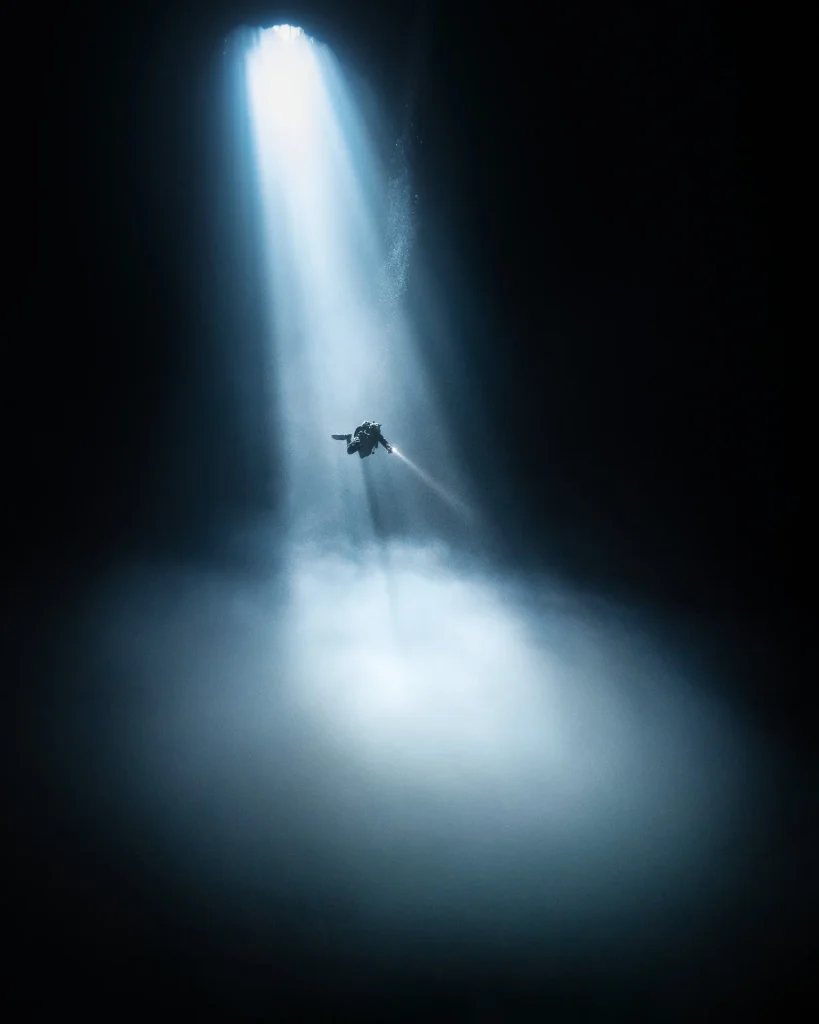
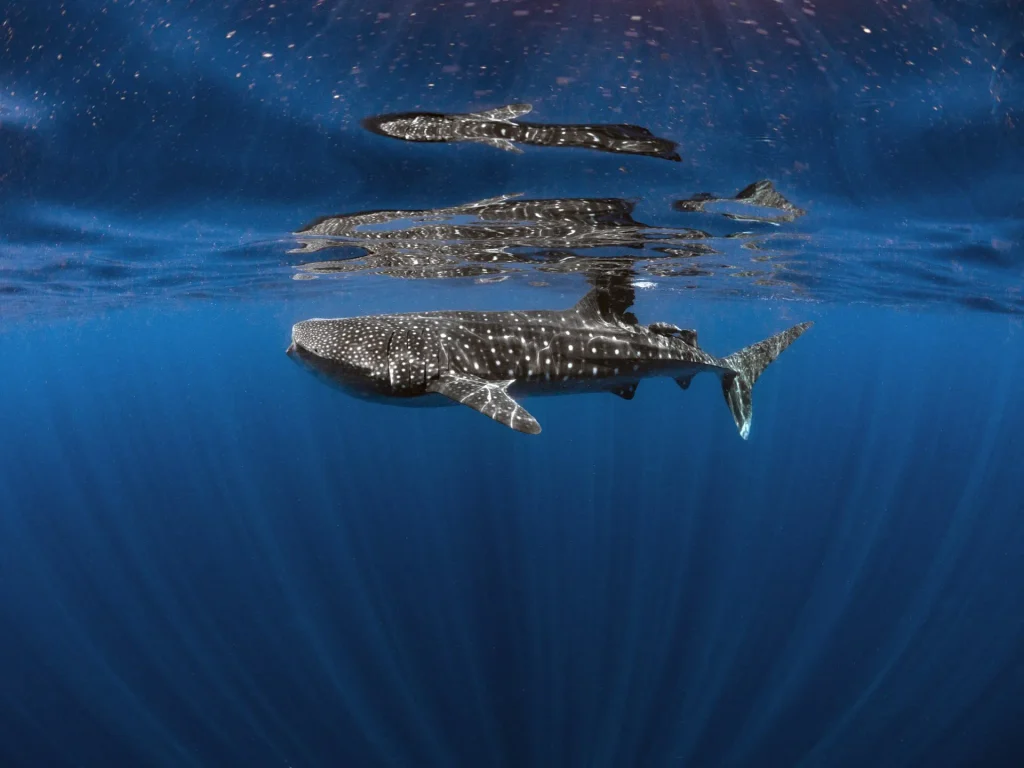
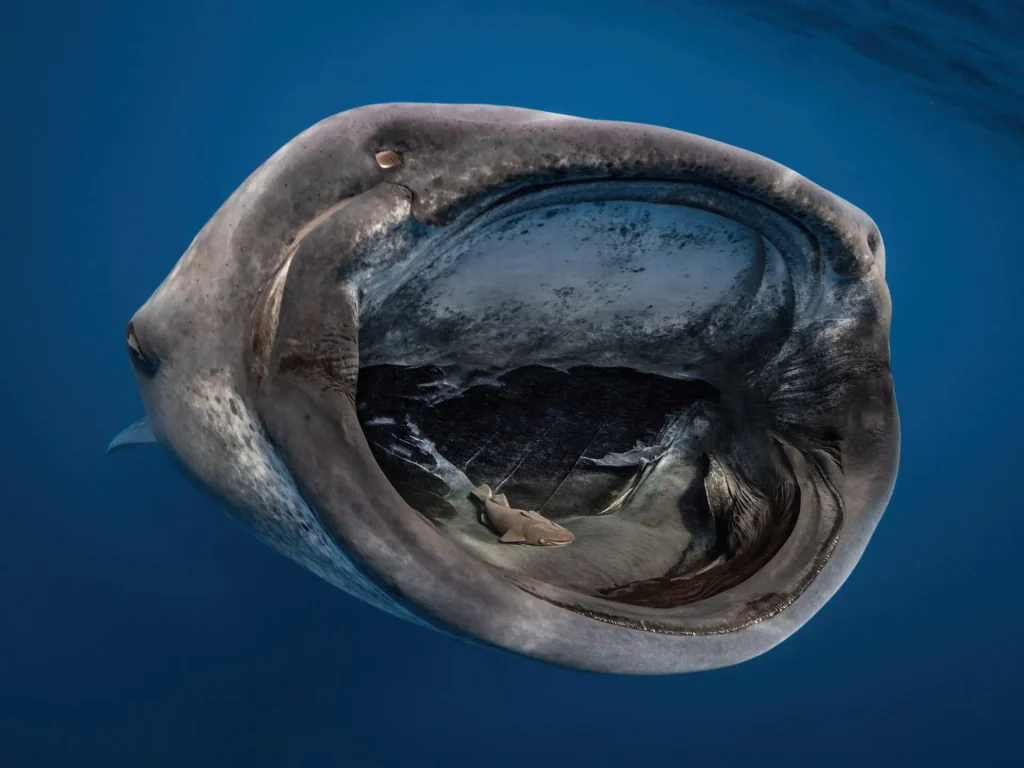
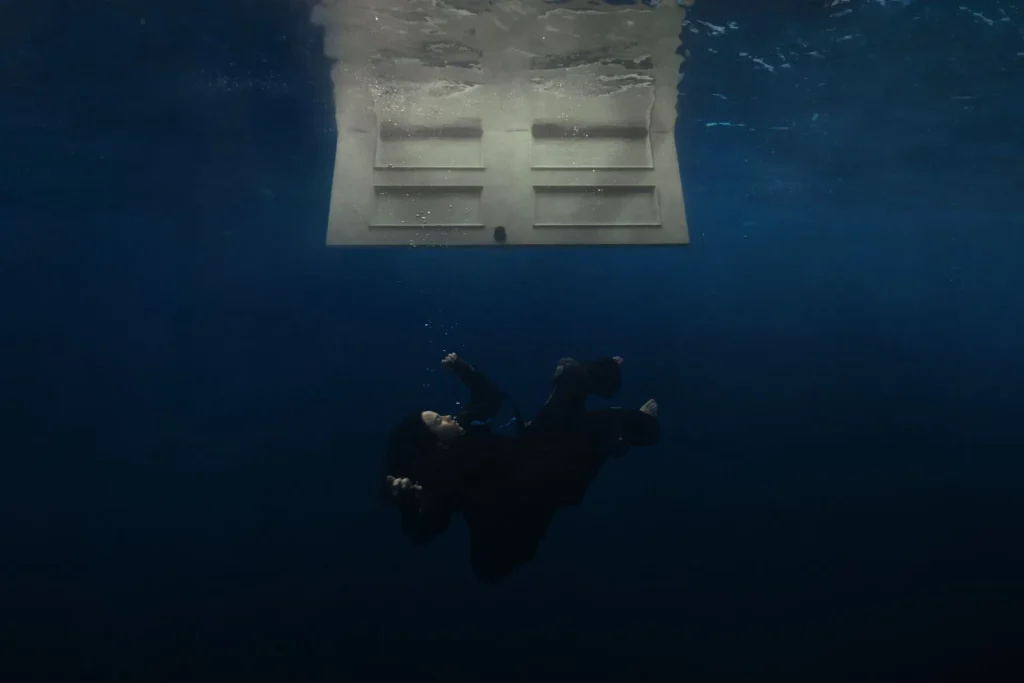
William Drumm: Once again, it was all connected. They found me through my Instagram, through photos of people in the ocean with whales. I’ve got some nice shots from Tonga with divers really small in the frame next to really big whales, showing that abyss-like scale of the ocean. I think Billie herself, or somebody on her team, saw those images and reached out to recreate that abyss feeling for her album cover.
Brett Stanley: There are a lot of underwater photographers who specialise in shooting people specifically, whereas you specialise more in wildlife with some dive and brand content mixed in. What was your thought process going from “here’s what I normally shoot” to being handed a brief like that?
William Drumm: For me, it totally made sense if I was shooting it in the ocean, going out somewhere with clear, deep blue water. Once I found out we were shooting it in a Hollywood film studio, in a pretty small pool, I was more like, huh, okay. There are probably people who know this kind of shooting better than I do, but I wasn’t going to say that. It was interesting, but it also let me bring in everything I’d been doing for smaller brands for so long, because there was a lot of planning and production and directing involved. When I’m shooting for a small brand and putting everything together from start to finish, I didn’t really realise it until this shoot, but it made me capable in a lot of different areas of running a shoot like this. Afterwards, multiple people from her team told me I was a really good director, that they hadn’t worked with many people who were as good at directing and also kind. That was another thing I heard a lot, that they’re used to working with people who aren’t very nice. All the experience I’d had previously applied pretty directly to this shoot, just with a bigger team, better resources, and better equipment, which made it easier and better.
Brett Stanley: It’s a shame that being kind is so rare in that world. What was it like going from totally uncontrolled environments to shooting on a wet stage where you can control everything, including the water temperature? Did that feel strange?
William Drumm: I’d shot a lot in pools and controlled situations before, but nothing with resources like this. We had a twenty by twenty foot soft box above the pool that we could position however we wanted, which was amazing, and being able to tell the grip and lighting crew exactly what we wanted and how to move it, without doing anything myself, was so cool. It was what I’d always done, just on a bigger scale with better tools, and I found it refreshing and easy to just tell somebody to do something instead of having to do it all myself. One of the hardest or newest things for me was that they wanted a live feed of everything. We set up a monitor on top of my camera, rigged that to a topside monitor that me and Billie would use to check images after each shot, and that also fed two other external topside monitors, one for her manager and producer team and one for her family, who were also there. Rigging all of that was tricky, and I actually flooded one of the two monitor housings I had on the shoot. Luckily I had a backup for everything, and I had a great assistant with me who worked for an underwater camera sales company, so he was able to grab the monitor out before it fully flooded, dry it out, and switch it for the other housing. I had really great people around me, which made everything smoother and made it all work out.
Brett Stanley: That’s the thing with those kinds of shoots. When you’re used to doing it all yourself and problem-solving on the fly, having that team and crew with you, people you can trust who know exactly what to do and can do it better than you’d have done yourself, makes a big difference.
William Drumm: Exactly. It’s so different from the world that I’m from, where it’s all on you. I think that’s why so many people were giving me praise for being a good director. In Hollywood, a lot of people are specialists, they only do one thing, and there aren’t as many people able to handle a lot of different components of a shoot. So that set me up for being good at all these different things, while I was working with experts in whatever specific niche they needed to be experts in. It played off each other really well.
Brett Stanley: That’s a good point. Having worked in film myself, everyone has their little box, and they’re very good at it, but there’s little crossover. Whereas on smaller productions, everyone has to know everything.
William Drumm: And most people can’t be bothered to do the other things either. They’re experts in a certain area and have no interest in going outside it, which is funny.
Brett Stanley: I get it though. Having worked in that industry for so long, and my ex-wife works in it too, people generally aren’t encouraged to go and do other stuff, so it’s not like “I don’t do it well, so I won’t get involved because I’ll mess it up or get in trouble.”
William Drumm: Yeah, and it makes sense when you have a big budget and people you can pay to handle other things. But for me, I don’t work with that kind of setup very often, so it was a trip.
Brett Stanley: Same for me. I do commercial work a few times a year, the big budget stuff, and it’s always like, “Oh right, I don’t have to do everything, I can just do my job.” It’s very nice.
William Drumm: So nice.
Brett Stanley: I could get used to it. How was it working with Billie? Was she comfortable in the water? I think she’s done some water stuff before.
William Drumm: She was great to work with. Very kind, a creative genius, and also a marketing genius, so she knew exactly what she wanted from the images from the start. Having that was super helpful, because we could review stuff together and she could say whether or not it was what she was looking for. Her direct input on everything was really helpful, and she was easy to work with, really down for spending a lot of time in the water. She was in the water for something like six hours, with very little complaining. The water itself was nice and warm, body temperature, but there was something weird in it, I think from the crane with the soft box on it, some sort of chemical, and her eyes were on fire, bright red and bothering her. I think it was pretty challenging for her, but she knew what she wanted and was there to get it, so there was no stopping until we had it.
Brett Stanley: How many key images did you need? Just the album cover, or other setups too?
William Drumm: We shot the cover, but also all the marketing materials, the back of the album, the inside flaps. The final count was something like five or eight fully edited images. We also shot other things that didn’t make the cut, which were super cool, and I wish they had. We shot some topside photos of her in the steam above the water, and images of her just below the surface, shooting from above. We had a few other concepts that we shot but that didn’t end up in the public release. A lot of things people never saw.
Brett Stanley: How prescribed was the shoot? Did you have creative freedom to change things up, or were the images pretty locked in?
William Drumm: The cover shot itself, she knew exactly what she wanted, pretty locked in. Everything else had a fair amount of creative opportunity. One of the images I’m proudest of is the back cover, where she’s dropping down into the water again, but standing a bit more vertical in the column, and it looks like she’s in the ocean, in this huge expanse of water, the abyss. That was what I was most worried about going into the shoot, creating the appearance of a vast ocean inside a small film studio. We had different backdrops and I wasn’t sure which would work best, so that image in particular addresses all the fears I had about recreating it. I love how it came out, and I think it does look like the abyss.
Brett Stanley: I’m looking at it now, and it does, that big blue, like you’re in deep open ocean.
William Drumm: When I first heard about the concept, I thought we were going to shoot it in the actual ocean, and I was really excited for that, and I think it would have been cool. Hopefully Billie does want to do a shoot like that one day for real. But everything came together in the studio, and there was some stuff that would have been much harder in the ocean, like the door, which would have been almost impossible. For the rest of the shots, it would have been fun and cool to do in the ocean too.
Brett Stanley: Has more work in this vein, album covers and portrait-style work, come from shooting this cover?
William Drumm: Some, not a ton, and it’s also not something I’ve pursued that hard. It’s been more of a brand recognition step-up for me personally, finding clients through that, but not necessarily similar work in the music industry specifically. It’s helped me get a lot more reach and visibility in other areas because of it.
Brett Stanley: So people recognise the brand, but aren’t necessarily looking for work like that specifically, similar to how Billie’s team found you through work that was nothing like what they wanted you to do.
William Drumm: Exactly.
Brett Stanley: That’s great though. How much did your Instagram blow up from being associated with Billie Eilish?
William Drumm: A lot. I think I went from around 120,000 followers before it came out, to over 300,000 after. It’s been going down a bit since then because of how Instagram works, it’s pretty brutal, but still.
Brett Stanley: It’s crazy. I shot an album cover five or six years ago that did really well and really resonated with people, and even now, years later, there are still Instagram posts tagging me with it. It only takes one piece of work that really connects.
William Drumm: Definitely. When people were tagging me right after it came out, it was insane, every time I opened Instagram there were dozens of people tagging me or messaging me, and I still get that too. It’s been good in other ways too. I’ve got a blog post about the shoot that, for a while, was by far my most successful organic page. So other things have helped as well.
Brett Stanley: When did that album come out? A couple of years ago?
William Drumm: 2024. It was fast too, they hit me up around February, we shot it in early April, and it was out in May. The whole thing moved quickly. Since then I’ve been doing a lot more work with brands, kind of what I’ve always done, combining marketing with photo assets. I’m shooting a bit less wildlife, just because I’m not in those places as much, and usually when I’m on trips I don’t have as much time for it. But I’m still shooting some, and trying to double down on what I’ve got really good at in the last couple of years, which is marketing these brands and helping them get the most out of the content they have.
Brett Stanley: Is that what Drumm Media is, your other company, leaning toward helping other businesses with their marketing?
William Drumm: Exactly. I started Drumm Media in 2020, during the pandemic. Like so many people, it was a bit of a pivot, since I couldn’t travel for a while and needed income, and it was also something that already interested me. What I really love is working with an emerging brand and helping with everything, creating images and videos for them, but also a logo, branding, a website, a plan for how they’re going to build the brand, and then putting it all into effect. I’ve done that for quite a few brands and want to do more of it. I love using the images to portray who the brand is and find their audience. The more I can combine all of it, the more fun and exciting it is for me.
Brett Stanley: Are you the only one creating the content, or are you working with content created by others too?
William Drumm: Both, a lot of both. I’ve scaled the business up and back down depending on what’s happening. At one point I had six full-time employees, and now I’m down to just a couple of contractors. It goes up and down. When I can shoot the stuff myself, I usually do, depending on what the content is, but some of the brands already have great stuff, so it’s about helping them figure out what’s actually good and use it well.
Brett Stanley: What have you noticed about using social media as a marketing tool? Is it still just as relevant today?
William Drumm: It’s a lot harder than it used to be. It’s always changing, and people are pretty phased out from it, or at least getting somebody from Instagram to a website is almost impossible now. I think the real value in social media now is more about brand building than selling products or getting direct conversions. There’s still big value in it, but it’s changed a lot, and I think a lot of brands see it as the only way to get their message out, the primary way to connect with their audience, and that’s just not true. That’s one reason I love doing websites and blogs too, because social media is so ephemeral, you post it and it’s gone the next day. Whereas a good website with a nice blog has a lot more evergreen value over time than social media does.
Brett Stanley: You mean search engine optimisation, showing up in people’s searches organically?
William Drumm: Right. I love SEO, it’s fun, because you see these concrete results and watch the graphs as people start finding the page. It’s hard to convince brands sometimes though, because the real results often don’t show up for three to six months, and the biggest value comes over twelve months or more, so it’s hard for them to understand that. What I tell them is, you could spend money on paid advertising and get your message out right away, but as soon as you take that budget away, it’s gone. Whereas if you spend that money upfront on the website and the SEO, it compounds, and you get more and more value out of it over time.
Brett Stanley: How do you feel about the rise of AI search, Google pushing actual results below its AI summary at the top?
William Drumm: I’ve had to learn a lot more about it and change how I approach it, but right now it’s still more of a benefit than a hindrance, as long as you format your schema and page content so the AI search tools can surface it properly, it can actually help a lot. It’s just different, and SEO has always been changing, so it’s not that crazy, it’s just the new wave of it. There isn’t really a filter on things a lot of the time though, so what you get through AI search may or may not be true, somebody might post something on Reddit and the AI shares it to you as if it’s factual. So there’s some inherent risk and challenge with it. But from a marketing standpoint, it’s pretty useful to implement right now.
Brett Stanley: Even search engine results aren’t necessarily factual, an article being written doesn’t make it true, but you click a link at your own risk and you kind of know that with the internet. With AI search sitting at the top, it has this authoritative voice, like, “Here’s a substantial article proving what I just said,” and that leads people astray. I don’t think we’ve developed the skills yet to discern what is and isn’t true.
William Drumm: I think so too. If it comes up in a search result and you click through, you can at least see whether the page looks credible or like garbage. With the AI surfaced results, it’s just text, you can’t tell where it came from unless you click through to check, and most people are just looking for an answer, so they don’t bother. It adds credibility to pages even if the page itself doesn’t look credible at all.
Brett Stanley: I think that’s where we’re at with AI, it’s come in hard and strong and authoritative, and a lot of people think it’s amazing, but it needs to evolve into more of a background thing, “here’s some suggestions I’ve found that may or may not be true.”
William Drumm: I agree. What about AI images, what’s your take on that?
Brett Stanley: I’m okay with people using it as a tool to modify images they’ve already created, fixing or removing things, for non-journalistic purposes. But the idea of typing out an image concept and having AI create the whole thing, then passing it off as your own work, I’m still coming to terms with. It doesn’t sit well with me, it feels disingenuous.
William Drumm: Absolutely. Seeing big brands use it like that is shocking too, because they’ve got the money to pay for real shoots, so why wouldn’t they. I do think the vast majority of people really value authentic content though.
Brett Stanley: I think there’s going to be a shift, and I’ve encountered this myself in commercial work, where brands don’t want to be associated with AI, so they make a point of doing something the hard way and documenting it. I recently did a pharmaceutical commercial where the pitch was either do this in CG or do it for real. The agency pitched both, and the real version won, so we shot it here in my studio. The brief itself, the reference images, were AI-generated, and they were so good that I basically ended up recreating the AI image in real life. I was proud of how close I got it to the original, but at the end of the day, it was strange to have done a shoot worth thousands of dollars essentially recreating something AI came up with.
William Drumm: That’s wild. It’s cool though.
Brett Stanley: The agency was very into it. They flew from New York to come onto set because they wanted to see how we did it, even the behind the scenes of it was really cool. I hope more and more agencies push that way and start saying, “We want to do things authentically,” because AI is going to cheapen it otherwise. What are your thoughts, how do you feel about it?
William Drumm: I feel the same way. It moves so fast, and as far as wildlife content goes, what we’ve seen so far is pretty terrible. Anybody with any real understanding of wildlife, what the animals actually look like, or of AI, can easily tell the difference between AI and real. But that’s changing more and more, and I really hate it. What I hate most is that there are kids growing up who haven’t seen these animals and have no idea what they actually look like, and they’re seeing AI representations that might not look anything like the real animal, and thinking that’s what it is. That part is terrible. I do think photography as a whole, I wouldn’t say it’s going to benefit exactly, but I do think authentic image creation is going to become more valuable because of it. Things like shooting on film are going to have more impact than ever, because it has to be real if it’s shot on film.
Brett Stanley: Yeah.
William Drumm: It’s scary, but I’ve also tried some AI tools for things like photo editing, and I think it’s a lot more difficult for AI to master creative skills than it is to master numbers-based things, things with a clear right and wrong answer no matter what. So it makes me a little optimistic, because I’ve seen what the newest AI can do with creative work, and it’s still struggling a lot. I think it’s going to be a lot harder for AI to actually mimic what people can do themselves.
Brett Stanley: I think that’s true. My worry though is that, like you said with wildlife, kids might never really know what the actual animal looks like.
William Drumm: We might get desensitised to the point where no one cares whether it looks right, because they don’t know what to look for. And I think the other thing is, the more we start spotting what’s wrong with AI, the more AI is going to learn to fix it.
Brett Stanley: Exactly. Even the terrible AI wildlife content, on Facebook, thousands and millions of people can’t tell. It’s a whale that doesn’t even look like a whale, with a huge mouth that opens like a crocodile’s, the fin facing the wrong way, and people are commenting, “Oh wow, that whale is so cool looking.” Come on.
William Drumm: I saw those ones too, with the milk just flowing like a laser beam from the mom into the baby. Oh my gosh.
Brett Stanley: A friend of mine posted one, a video of a baby whale nursing, where the mom just sort of squirts milk across the ocean into its mouth, and I was like, I’m so sorry, but that’s not actually how it works. Then there’s the other side of it, people like Christopher Nolan, a visionary filmmaker who shot The Odyssey entirely on IMAX film. For those who don’t know, that’s a massive film format, they had to make special cameras for it. I watched a short documentary about how they print and process it, and if you’ve got special effects in a film, you shoot on film, scan it, add the effects, then reprint the film, but with IMAX it takes something like twelve minutes a frame to scan and print. The overhead of making an IMAX film once you’re working digitally is huge, to the point where Nolan will build a forty-foot puppet of a creature because it’s easier to do that and shoot it in camera than to scan, digitally alter, and reprint the footage.
William Drumm: Oh, wow.
Brett Stanley: I feel like people who are dedicated to doing things practically are the ones who are going to save our whole craft, because there’s so much kudos attached to it, people go, “Oh my god, you actually did that,” when in reality it was the simpler way to do it.
William Drumm: That sounds really cool, I should check that out.
Brett Stanley: It was just a YouTube thing, I think Adam Savage from MythBusters did a little documentary on the IMAX side of it.
William Drumm: I think for brands getting images for their products, there are going to be a lot more options with AI, but I think authentic content is going to win out in the end, and the brands who understand that, which will be a lot of them, are going to be willing to pay more and risk more to get it. It sounds like from your experience, they already are.
Brett Stanley: The pharmaceutical industry probably doesn’t care either way, but I think the agency and the end client had a bit of moral standing around wanting to do it that way, and thought it was cool. A lot of brands don’t care, because at the end of the day they’re just trying to sell a product. But for brands like the ones you work with, dive gear, I think if their audience found out they’d faked it, that would be a really bad look for something that’s meant to take people out into the real world.
William Drumm: And it’s designed for people who appreciate the real world, who love nature and the outdoors. I do know a guy who did a commercial shoot for a big skiing manufacturer where they filmed it during the summer here in Denver, with mountain backdrops, put the guy in ski gear, and AI created all the snow and the rest of it.
Brett Stanley: Was that stills or video?
William Drumm: Stills. Either way, I think it’s very valuable for photographers to learn how to use it to their advantage if they want to stay competitive.
Brett Stanley: For people in a position like mine, running basically a portrait studio, it’s not so much the photos, it’s the experience people are paying for. Photographers and creatives who offer an experience, as opposed to just the end result, are going to keep going for a while, I think.
William Drumm: More insulated. Yeah, totally.
Brett Stanley: You’ve moved more into what I’d call the underwater portrait world too, right?
William Drumm: Yes, and I really love it. One thing about it is having control over the conditions. Through the Billie Eilish shoot and a few others, I started to really appreciate being able to control those factors a lot more. I see it more as art photography than what I usually do with wildlife. It’s like creating an image that’s beautiful, more like a piece of artwork, where you and your model and whoever you’re working with come together to create something. Not that the wildlife stuff isn’t artwork too, but this is different, and I really love that part of it.
Brett Stanley: In my mind, there’s a difference between the documentary art of wildlife work, where you’re not creating with the animal, you’re just using your creative skills to capture a beautiful scene, versus the pool work, where you’re in charge of everything. Are you enjoying that freedom to create your own world?
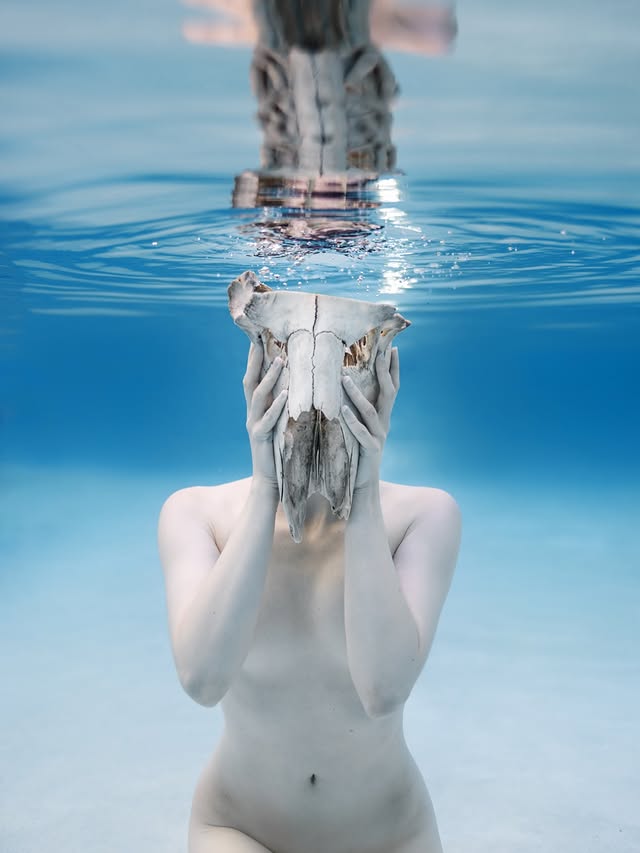
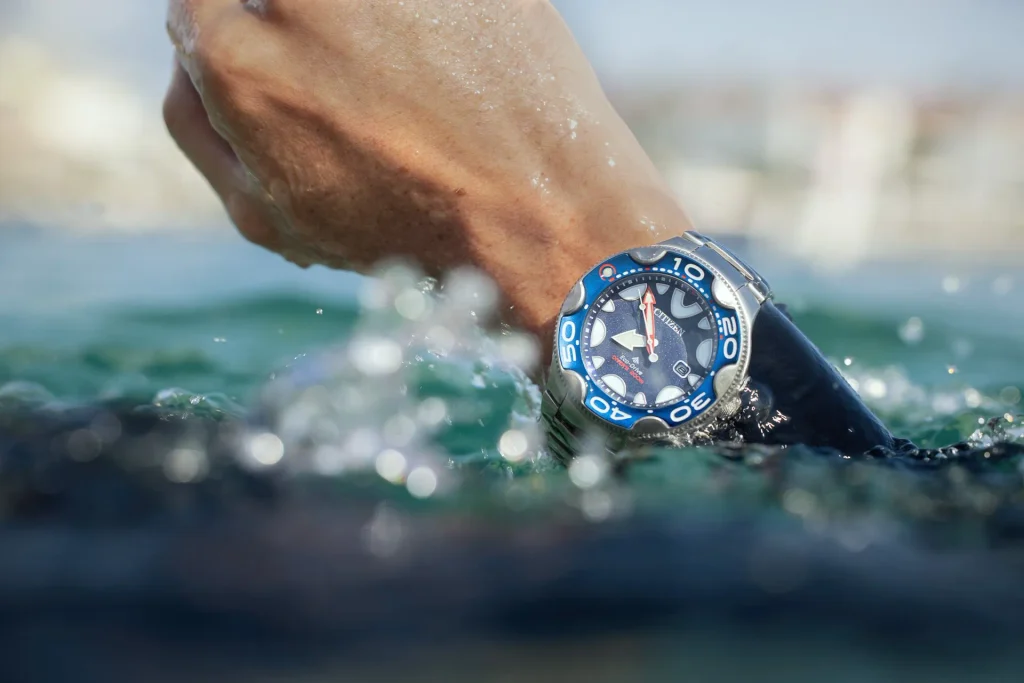
William Drumm: I really enjoy it, chasing down a vision and making it come to life, it’s so fun. Having control over the lighting is awesome, and through my underwater product work, a lot of watch photography and that kind of thing, I’ve developed a huge love and appreciation for how things look reflected off the surface and right under the water, and being able to play with that is really fun for me.
Brett Stanley: Are you getting more clients asking for that kind of work?
William Drumm: Yes, it kind of goes in phases. Last year I did a ton of it, this year a bit less. I don’t have my own pool studio, so that’s part of it, and the other part is just that getting this media marketing agency up and running is a lot of work. I don’t see underwater portrait photography as something I’d count on for income, but as a creative outlet, I love it, and for a bit of extra income here and there, I’m definitely keeping it open and hoping to do more of it.
Brett Stanley: Are there people who’ve inspired you throughout your career, people you followed or were motivated by?
William Drumm: For me, especially earlier on, Paul Nicklen was a huge inspiration. I ended up meeting him randomly when I was living in Monterey, during the tuna crab aggregation, these little red crustaceans that look kind of like tiny crawfish, that swim in the water column, and every once in a while there are massive accumulations of them, millions and millions. We had one of those in Monterey, and Paul and his team came to photograph it. I’ve got some of my favourite topside landscape images from that, these beaches in Monterey with a nice sunset in the background, and the beach just bright red, covered in dead crabs, really cool. I met him on the beach shooting that, and the next day we went out and photographed sea lions ripping apart mola mola, also super fun to see and shoot in the wild. So Paul Nicklen was big for me with the wildlife work. For creative work, I’m really inspired by Frank Frazetta, are you familiar with him?
Brett Stanley: No, I don’t think so, I’m terrible with names.
William Drumm: Me too. Frank Frazetta was a painter who did a lot of fantasy work, he painted the covers for all the Conan books, these really epic scenes, usually with a hero and a damsel in distress, monsters, a lot of action, and the image just tells a story. For the pool work I do, and a lot of the model photography, Frazetta was a huge inspiration. I ended up connecting with his granddaughter on Instagram a couple of years ago, she’s great, and she sent me a huge anthology book of all his work.
Brett Stanley: That’s incredible.
William Drumm: He’s cool.
Brett Stanley: I looked up his work, and it is very environmental and dramatic, incredible for a painting.
William Drumm: It is, and there’s always more to it than the frame. It makes you wonder what’s going to happen next, or how they got there, the whole thing feels like a moving story even though it’s a single frame.
Brett Stanley: It’s incredible. William, this has been so good. Thank you, man, it’s been great hearing your whole story and how you ended up where you ended up. Thanks for sharing it.
William Drumm: It’s been a lot of fun talking to you, man. Thanks for inviting me.
Brett Stanley: Of course. Let’s do it again sometime.
William Drumm: Love to.
Support The Podcast
Merchandise
Buy The Underwater Podcast merchandise and 25% of profits will go to keeping our oceans clean with Project AWARE.